By Staff Reporter: As universities around the world grapple with rising levels of student stress, anxiety, burnout and social isolation, Indian ocean educator and accessibility advocate Elsie Gabriel believes one of the most powerful classrooms may exist far beyond campus walls.
It lies beneath the waves.
For over two decades, Gabriel has worked at the intersection of ocean conservation, youth leadership, disability inclusion and environmental education, pioneering initiatives that use marine environments as spaces for learning, healing and social transformation.
As founder of Accessible Ocean Tourism, she has become a leading voice advocating for greater inclusion in marine education, scuba diving, citizen science and ocean conservation. Her work challenges a long-standing assumption within environmental and tourism sectors—that ocean experiences are primarily designed for the physically able.
Instead, Gabriel envisions a future where students, persons with disabilities, senior citizens, neurodiverse individuals and marginalized communities all have equal opportunities to engage with the ocean and become active stewards of marine ecosystems.
“The ocean teaches lessons that cannot be learned from a textbook alone,” Gabriel says. “It teaches humility, resilience, teamwork, empathy and interconnectedness. These are the very skills young people need to navigate an increasingly complex world.”
Addressing an Invisible Crisis
Gabriel’s work comes at a time when universities globally are witnessing unprecedented concerns around student mental health.
While disability is often understood through visible physical impairments, Gabriel emphasizes that many young people today are living with invisible challenges including anxiety, depression, ADHD, autism spectrum conditions, trauma, sensory sensitivities and chronic stress.
“Many students are carrying burdens that are not immediately visible,” she explains. “Academic pressure, climate anxiety, social media overload and uncertainty about the future are affecting an entire generation.”
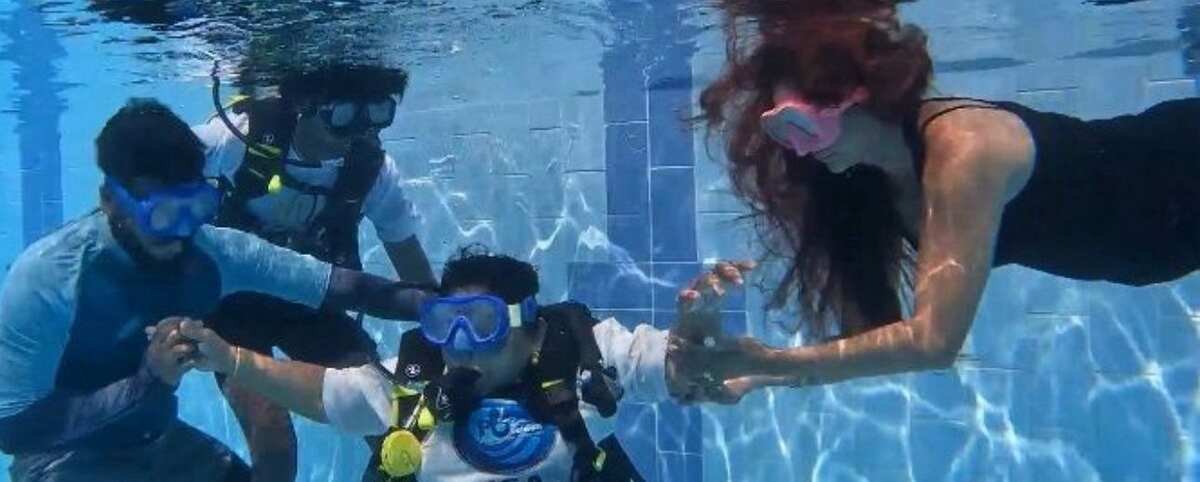
Through accessible marine experiences, citizen science initiatives and ocean literacy programmes, Gabriel believes students can reconnect not only with nature but also with themselves.
Research increasingly suggests that time spent in coastal and marine environments can reduce stress, improve emotional well-being and strengthen social connections. For Gabriel, these findings validate what she has witnessed firsthand through years of working with young people.
“The ocean has an incredible capacity to restore perspective,” she says. “When students experience marine biodiversity firsthand—whether it’s a coral reef, a sea turtle, a dolphin or a mangrove ecosystem—they often rediscover a sense of wonder that modern life tends to diminish.”
From Students to Ocean Citizens
What distinguishes Gabriel’s approach is her focus on active participation rather than passive observation.
She encourages students to become citizen scientists, conservation volunteers, environmental communicators and community leaders.
Projects may include monitoring coral reefs, documenting marine biodiversity, assessing coastal accessibility, participating in beach clean-ups, supporting community conservation programmes or contributing to environmental research.
These experiences allow students to connect local actions with global challenges such as climate change, biodiversity loss and environmental justice.
“Young people do not want to inherit solutions,” Gabriel says. “They want to help create them.”
By involving students directly in conservation efforts, she believes education becomes more meaningful and transformative.
Learning From Coastal Communities
A key pillar of Gabriel’s work is recognizing the value of Indigenous and traditional ecological knowledge.
Throughout her engagements with island communities and coastal regions, she has advocated for greater recognition of local knowledge systems, particularly those held by women.
Many Indigenous and coastal women possess generations of expertise related to marine ecosystems, fisheries, weather patterns, biodiversity and sustainable resource management.
“Conservation cannot succeed if it ignores the people who have lived alongside these ecosystems for centuries,” Gabriel explains.
She actively promotes leadership opportunities for community women and girls, helping connect traditional knowledge with modern conservation and sustainability initiatives.
This approach reflects a broader belief that environmental solutions must be inclusive, participatory and rooted in community realities.
Making the Ocean Accessible
Beyond education and conservation, Gabriel has become a prominent advocate for accessible tourism and adaptive diving.
Working with dive operators, tourism stakeholders and conservation organizations across India and the Indian Ocean region, she promotes inclusive practices that enable participation by people with physical disabilities, neurodiverse individuals, senior citizens and those requiring additional support.
Her message is simple: accessibility benefits everyone.
“When destinations become accessible, entire families can travel together. Communities benefit economically, businesses expand their reach and more people become connected to the ocean.”
She argues that accessibility is not a niche concern but a critical component of sustainable tourism, social inclusion and the emerging blue economy.
A New Vision for Higher Education
As universities seek innovative approaches to preparing students for an interconnected world, Gabriel believes accessible ocean engagement offers a powerful model.
By combining environmental sustainability, public health, disability inclusion, community partnership and global citizenship, students gain practical experience addressing real-world challenges.
More importantly, they develop empathy, leadership and a deeper sense of responsibility toward both people and planet.
“The future of education is not only about knowledge,” Gabriel says. “It is about connection—connection to communities, to nature and to one another.”
For Gabriel, the ocean is more than an ecosystem.
It is a teacher, a healer and a catalyst for social change.
And in an era marked by division, uncertainty and environmental crisis, she believes its lessons have never been more important.
www.accessibleoceantourism.org
Elsie Gabriel is an ocean educator, environmental leader, founder of Accessible Ocean Tourism, International Director Handicapped Scuba Association and advocate for inclusive marine education, disability rights, youth leadership and ocean conservation.